Why Folk Music Is More Important Than Ever
It’s no coincidence that Kneecap are Irish
I think folk music has a branding problem. Filed under heritage, tradition, archival. That it belongs to the past. Worthy, definitely beautiful, but fundamentally non-urgent.
So rather than abstractly arguing for its importance. I’m just going to take you through a few artists and a couple of their songs.
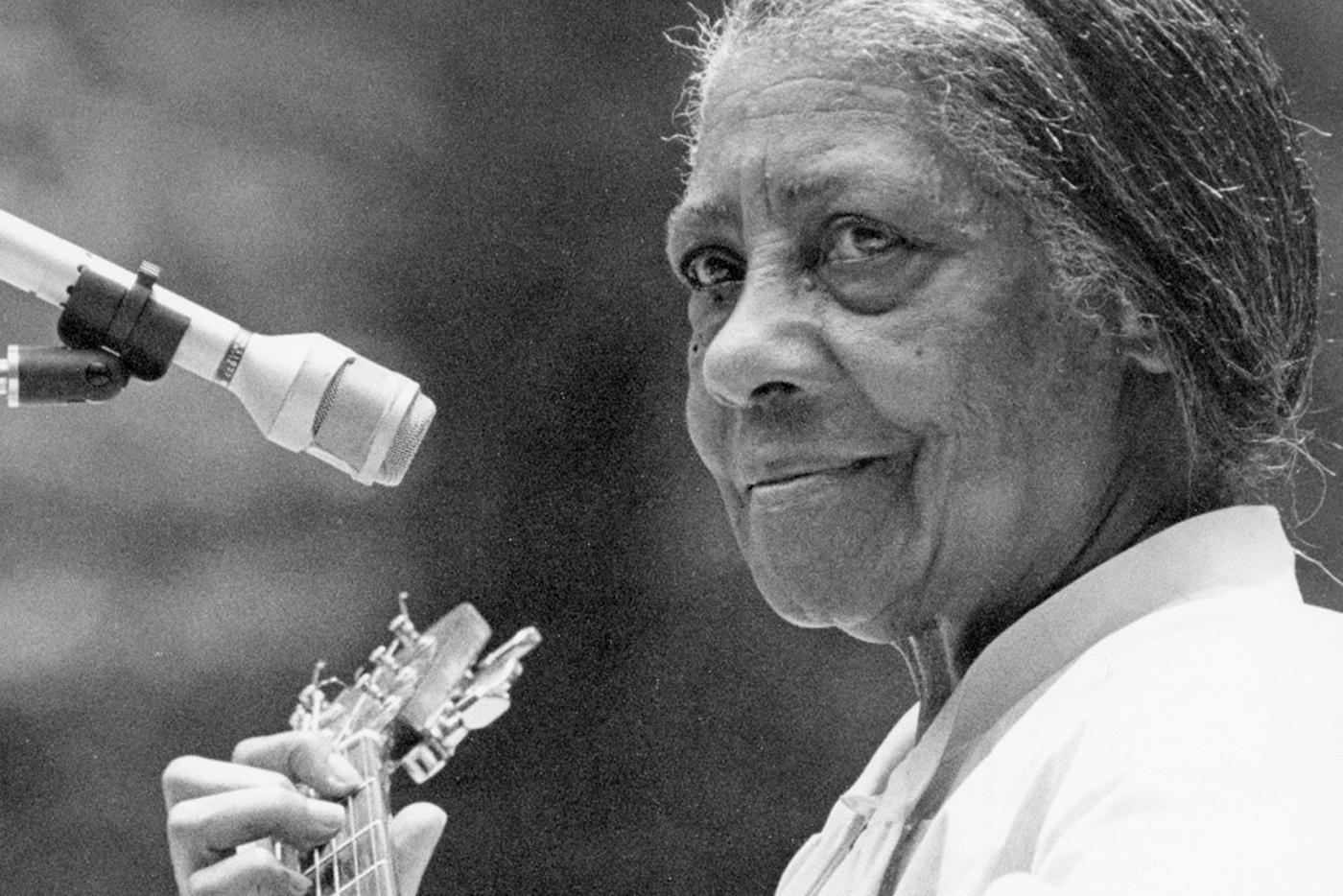
Elizabeth Cotten wrote “Freight Train” in 1906 when she was around twelve years old. It would be another half-century before the song found the audience we now associate with it. By then, Cotten was already a grandmother.
The song itself is so deceptively simple. Melodically, it drifts along with the steady rhythm of the train it describes, repeating phrases with this hypnotic quality that I love. But beneath that simplicity sits something strange and packed with meaning. It seems to me her voice feels like a longing to disappear into some other life entirely.
Of course, lyrically, there is also darkness running through the song. Cotten speaks of death so casually, as though it were simply another station along the line. The train becomes a symbol for escape from obligation, identity, and even mortality itself. It’s really a song about movement when remaining still becomes unbearable, even to a twelve year old.
Perhaps that is why Cotten’s own life feels so intertwined with the song. She spent decades outside the spotlight, ignored and overruled, working ordinary jobs, raising a family, and living a life that would have appeared entirely unremarkable. That feels increasingly difficult to imagine today. We are encouraged to think in terms of momentum, visibility, and timing. We worry about being discovered too late, starting too late, publishing too late, becoming too late.
Cotten’s life offers a staunch rebuttal to all that.
That seems really fitting to me. A freight train does not care about recognition. It doesn’t ask whether anyone is watching, it simply winds its course through the darkness.
If Cotten’s story teaches us anything, it is that waiting is not the same as failing. Sometimes the distance between creation and recognition is measured not in months or years, but in generations.
One of the most influential guitarists of the twentieth century despite never presenting himself as an innovator. Doc Watson. Born in North Carolina and blind from infancy, his role wasn’t invention, but transmission.
His version of “Alberta” is beautiful and yearning. Maybe it’s about a woman. Maybe it’s about a place. Maybe it’s both. The ambiguity definitely isn’t a flaw, it’s part of what makes the song endure.
That ambiguity is partly historical. “Alberta” likely emerged from older work-song traditions and travelled through river towns and labour communities long before anyone thought to write an author’s name beside it. Like most good folk songs, its origins are murky.
Doc alters the lyrics, softens the edges, and makes the song feel way more personal. In another genre this might be seen as interference. In folk music it’s essential.
That’s because this music doesn’t really belong to anyone. These kinds of songs survive because people keep finding new ways to tell them. The tradition isn’t preserved by some perfect rendition but by a meaningful retelling. It’s a bit like someone who’s really good at recounting stories, we don’t care that the details aren’t accurate, it’s how it gets told, that’s what matters.
Doc understood that. He wasn’t trying to create something entirely new. He was helping an old tale continue on its journey.
This one might make you consider sticking to Dry January next year.
Whatever you think of Bob Dylan you’ve got to hand it to him, the guy can make you feel things. Before the sunglasses, the mythology, and the Nobel Prize, he recorded “Moonshiner”. On the surface it’s a drinking song (it started off that way). In reality, it’s about something far older and more familiar.
It’s compulsion. The song follows a man who knows exactly what is hurting him and keeps walking towards it anyway. There’s no final lesson definitely no recovery. Just desire pulling against reason.
At the end, one line really gives the game away:
The whole world’s a bottle / And life’s but a dram.
The bottle becomes a symbol for whatever thing we use to dull ourselves, distract ourselves, comfort ourselves, or slowly disappear into. Alcohol is just the example at hand. The pattern is so universal, that’s partly why the song still feels so current to me. We haven’t changed much since then, we’ve just become more inventive with our distractions.
What makes “Moonshiner” remarkable is that it never moralises. It doesn’t condemn the narrator, nor does it excuse him. It simply presents him as he is, and leaves the listener to decide how much of themselves they recognise.
That’s the folk tradition at its best. Certainlty, no preachy sermon or diagnosis. Just an uncomfortable truth carried in a melody. That feels more modern and essential than ever before to be honest.
I suppose at this point it would be remiss not to mention Ireland.
I recently saw Daoirí Farrell at Otley Courthouse. When he sings songs like “The Valley of Knockanure”, he isn’t performing history so much as carrying it forward so we don’t forget.
What strikes me about Irish folk songs is their refusal to become something abstract. They’re so stubbornly attached to real people, real places, and real consequences. Grief is allowed to remain specific to people and places. Names are named. Towns get remembered. I suppose it’s no coincidence that Kneecap are Irish.
There’s a temptation I’ve noticed in modern storytelling (and my own writing) to universalise everything. To smooth rough edges into broader lessons about the human condition. I love how this music often resists that instinct. These songs don’t always ask to be transformed into metaphors. They are records of love, loss, injustice, humour, migration, rebellion, and survival.
They know that the local is already universal enough.
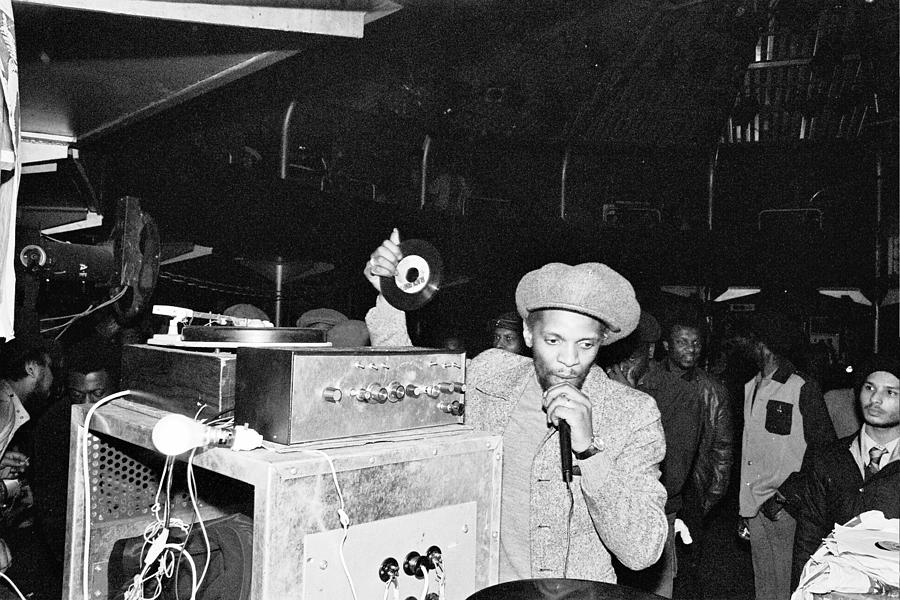
Folk music rarely asks who should get the credit. It asks whether the story is worth carrying forward. In a modern culture increasingly obsessed with visibility, personal branding, and self-expression, that humility feels surprisingly radical.
It’s not valuable because it’s quaint, beautiful, authentic, or “real” in some vague sense. It’s valuable because it allows grief to remain grief, places to remain places, and people to remain people. Especially, it reminds us that not everything exists for our comfort.
A twelve year-old girl writes a song about wanting to disappear. More than a century later, people are still learning it on battered guitars in living rooms, pubs, and front rooms across the world.
That’s a remarkable thing when you think about it.
Most of us will eventually be forgotten. Most of our opinions, anxieties, and carefully curated identities will disappear with us. Yet somehow a melody written by a child in 1906 continues to find new hands. Maybe that’s what this kind of music really preserves.
So anyway, that’s why I think folk music is worth protecting.