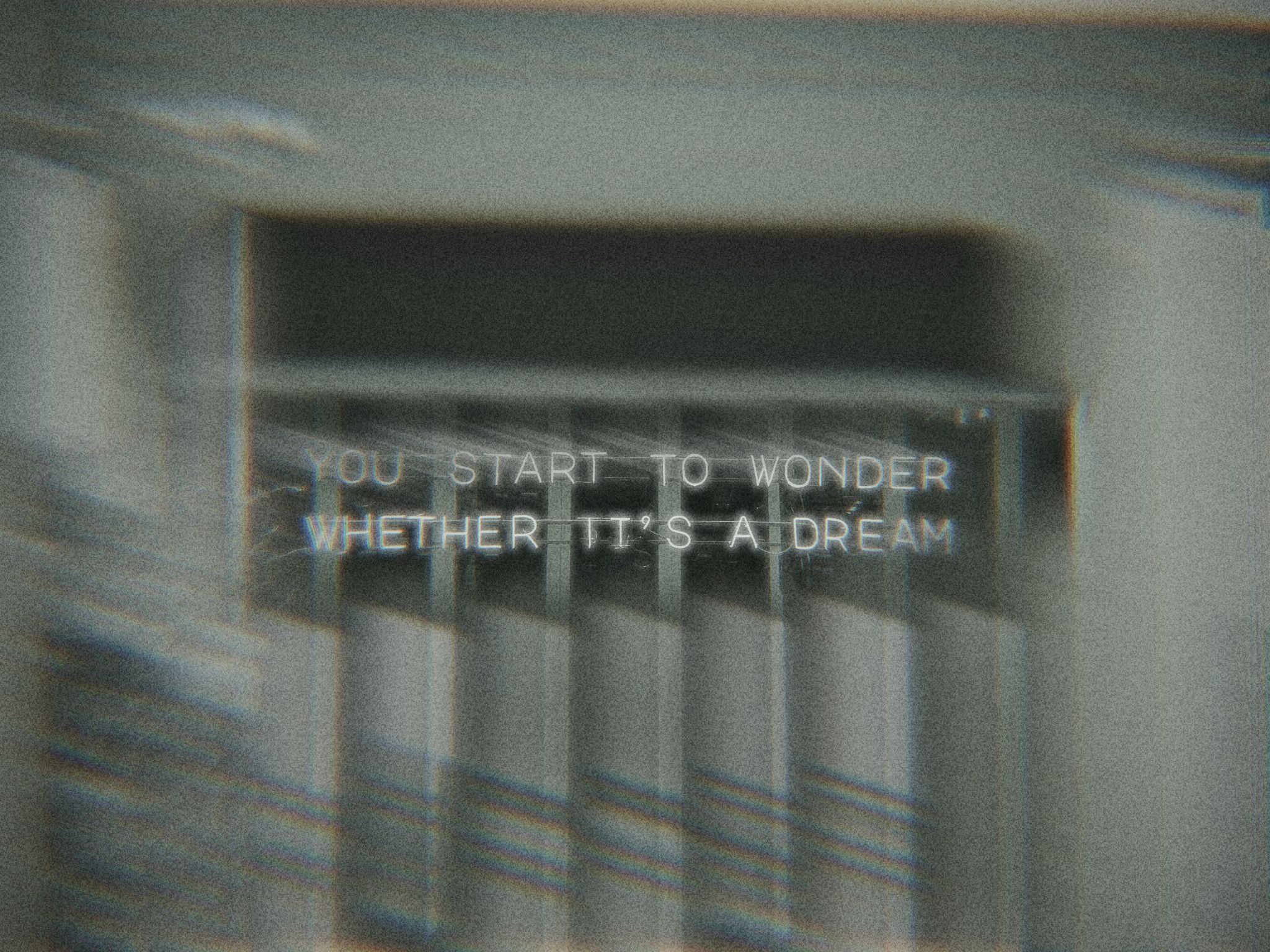
A thinner state of consciousness
I understand the appeal completely
There are certain experiences people describe as elevated states of consciousness. Dance floors. Psychedelic drugs. Meditation. Yoga. Repetition. Intensity of feeling. You know, times where the usual narration of the self starts to thin out and something allegedly meaningful takes its place.
I understand the appeal completely.

One of my favourite dance records is Swirl by Josh Wink.
It barely goes anywhere. It loops and accumulates and folds back into itself. Each section passes almost identical to the last, altered just enough to keep your attention from fully escaping. Dance music operates like this because repetition dulls the forward-facing machinery of the mind until it stops asking where any of this is supposed to be leading.
You even move in loops at events like that. Dance a bit, out to the smoking area for a rest, wiggle your way back to the dancing spot, and back around we go.
Anyway, Josh Wink has a more famous track — Higher State of Consciousness — which felt a bit too on the nose for the intro to this blog, but I’m sure you get the picture. It’s saying, “go on, drop an E.” Maybe you’ll end up closer to whatever truth you might be yearning for.
To be fair, something does happen in these states. The mental static lowers. In its place arrives a sensation often interpreted as clarity, immediacy, even openness and presence, perhaps even love.
Thing is, the moment you leave — out of the heat, away from the music, back into ordinary air — everything remains exactly where you left it. Your contradictions. Your bad habits. Your relationships. The slow work of being a person. None of it has been altered by an hour (or a few) without inner commentary.
If anything, it’s been waiting patiently, probably smoking, mildly embarrassed by your actions.

You know when you meet someone convinced they’ve had transformative experiences? There was a guy I knew at university who explored LSD heavily and spoke about it with a kind of priestly abstraction. He would talk about how profoundly it had changed him, how he could see things with more clarity. I can understand that. But there were more existential things I could never get a clear answer to: what had actually changed? What about his ability to deal with ordinary life?
Sometimes I would trip sit with him in his room and play video games or watch TV whilst he spaced out, or played the flute. I never really got it. Afterwards, we’d have a spliff and I’d ask him questions (child of science I guess). The answers always dissolved into this vagueness, with a smile. “It’s just a feeling, man.”
There’s something I find deeply suspect about a state that feels elevated precisely because it removes your ability to evaluate it. In the heat you can’t think. In the crowd you didn’t need to. In the repetition you stopped trying. So, which version of you is concluding this is enlightenment?
And obviously I’m not just talking about psychedelics or clubbing here. I mean this wider cultural fixation on ego-dissolution disguised as wisdom.
This is probably how we ended up with the enlightened fuckboy, the narcissistic yogi, and the self-deprecating overthinker. More often than not, people like that seem deeply uncomfortable with themselves.
It took me a long time to write this because almost every argument here can be escaped if you’re clever enough. I’m not even entirely convinced by my own critique anymore, especially after talking about it with friends whose experiences I genuinely respect.
Someone compared this to the way sobriety is sometimes spoken about now. Not like, as recovery from something destructive, but almost as a complete metaphysical rebirth. A new self. A purified self, cleaner than the rest of us.
But I still find myself wondering whether we’ve become too attached to dramatic narratives of transformation in general. What about people whose lives improve slowly? Without collapse first?
Anyway, I think what’s actually happening in these states is far less mystical.
Briefly, you become a version of yourself no longer preoccupied with explaining itself. Just experience stripped of excessive commentary. We’re sold on the idea that experiences like that can bring insight, or at least peace. But it isn’t insight or peace, really. It’s the absence of noise, not the presence of meaning.
Confusing the two is how you end up building a life around feelings that only work for you precisely because they can’t be examined while they’re happening. Push far enough, lose enough of yourself, and all of this starts to resemble a life organised around self-erasure.
The older I get the more I just find myself asking: what the hell is any of this actually doing for us?
Perhaps for people like me, it is a fantasy that the self can somehow be escaped.
And there lies the crux. So I guess if you are anything like me, the question worth asking isn’t what you experienced then. It’s how you feel when the music stops, the room cools, the crowd goes home and you’re just standing, ordinary, back in possession of yourself.
Did anything feel different upon your return?