taste is a filter
and most of reality doesn’t make it through
Long before I picked up a camera, I noticed patterns. Maybe we all do as kids. Not in any disciplined or analytical sense, just as a kind of compulsion. I would count things up without meaning to. The leaves on a houseplant. The spacing of windows on a terrace.
Photography didn’t give me that instinct. It refined it. Or perhaps legitimised it, and gave it a nice little framework to operate inside. What had once been idle became something active and consequential.
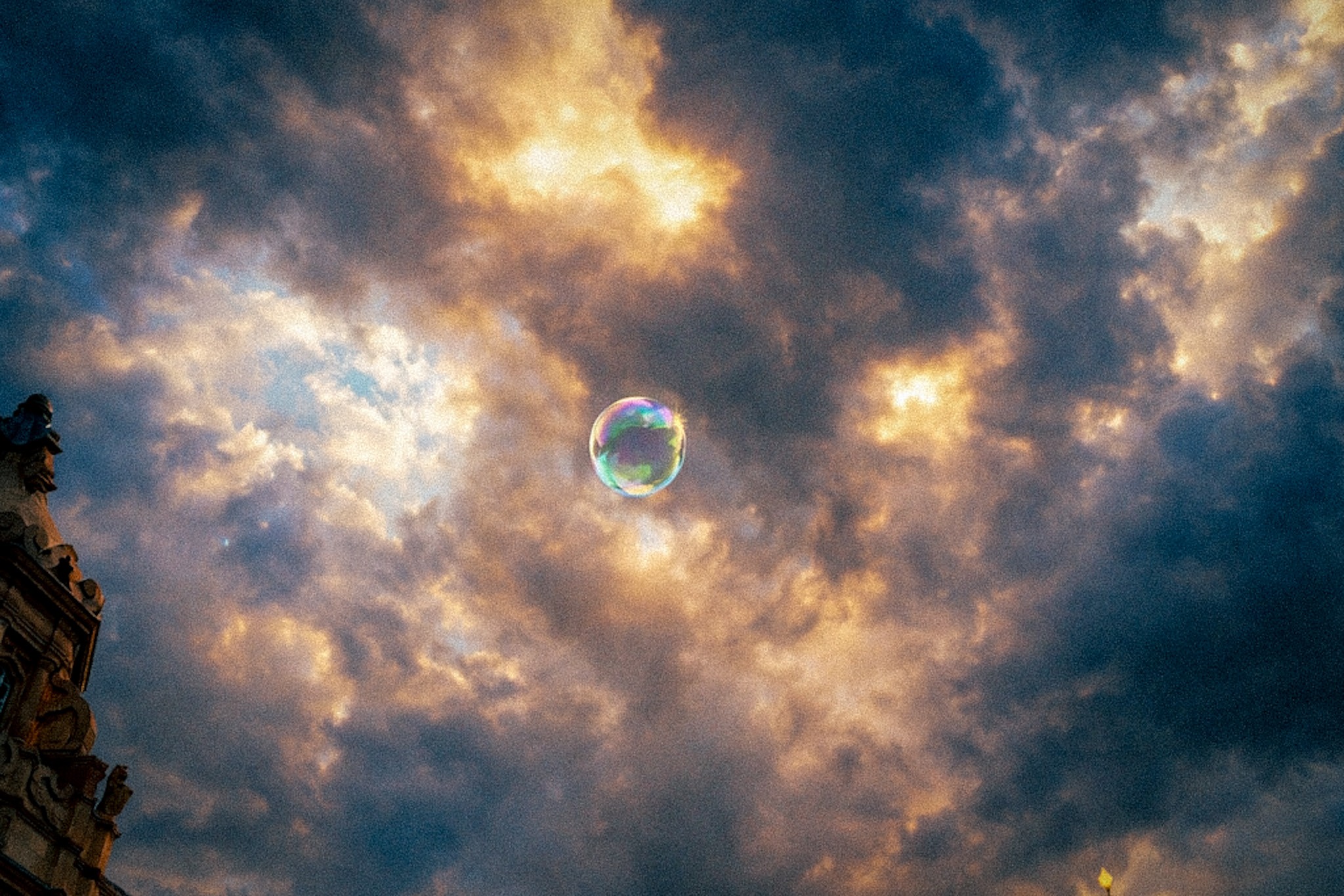
I was in Bucharest in February and took a set of photographs that might be my favourite. It felt ridiculously easy. Snow lay across the foggy streets, blooming the glow of neon signs, the night turned into something cinematic without any effort. The old facades — worn, ornamental, Parisian — stood beside hefty slabs of Brutalist concrete. The whole city felt like it had somehow rendered itself into stills from a distopian movie.
If I could bottle that feeling, I would. Honestly, you could raise the camera almost anywhere and the frame would work.
I had the same thing in Japan. Not identical, but Bucharest adjacent, more spiritual in the way those Japanese gardens are. Japan is funny because the whole place gives you the sense that the environment itself is designed into being seen. Neon lit Tokyo one day, calming temple the next. The work had already been done for me, my only task was to recognise it.
Anyway, those Bucharest images performed better than anything I’d taken before. There’s a good amount of dopamine in that. A sweet confirmation, that your eye aligns, at least a bit, with what others recognise as valuable.
Or at least pleasing enough to earn that shallow tap on the like button.
At the time, I felt it was progress in my work. Now I think it was something simple. The world, in those days, met me halfway.
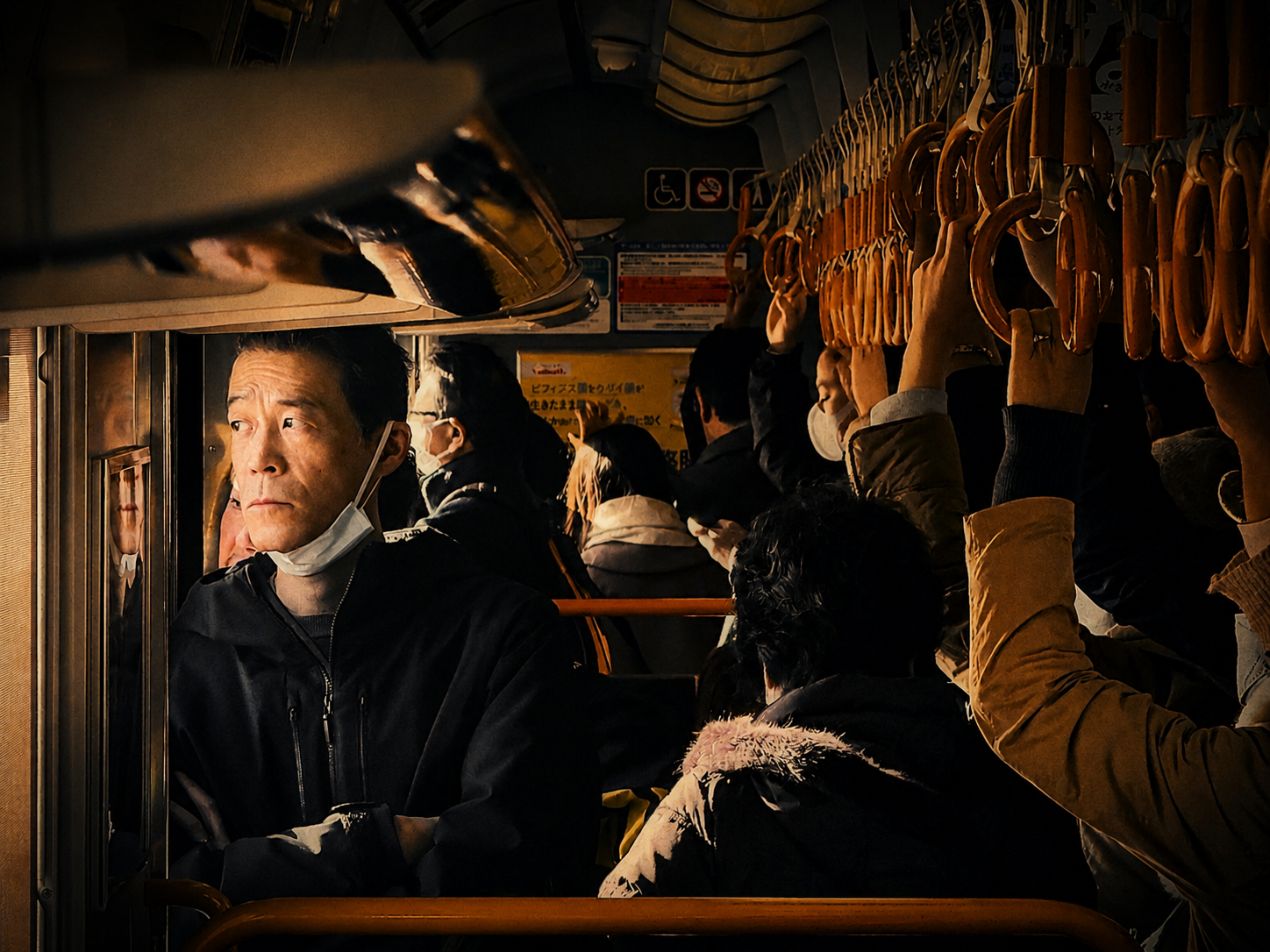
And so the other night I was at the West Indian Centre in Chapeltown. Subdub, first time there in years. The room had a feeling that I love: low ceilings, loads of people, heavy sound. The sort of place where photographic moments appear all too easily.
I don’t bring the camera to social events. Only my phone. I don’t go in with the intention of ruining my fun by standing behind a lens the whole time.
Nevertheless, there was a couple dancing near the stack. Both fully tatted, the guy was in a white vest (the wife-beater fit), the woman in a leather one (the Berlin fit). They complimented each other without seeming to try. It wasn’t just that they looked good together. It was that they belonged to the same visual language. You could register it instantly, and easily. You know, when you see a couple, and you’re just like “ah, I get that.”
They drifted into a position that suggested a photograph. The speakers behind them, the space opening between the crowd just enough… the photo was beginning to coalesce.
But the lighting would not comply with my mental image of how I thought they should look. It moved across them without settling. It caught the wrong edges, and fell away at the wrong moments. At one point she turned, and kissed him gently on her tip toes. “Fucks sake, too dark”. Again and again, the image almost formed, then collapsed back into the general blackness of the dancefloor.
So I did nothing. And the phone remained in my pocket. That complimentary photo that would hit my insta a few weeks later never materialised.
I told them they looked great together instead.
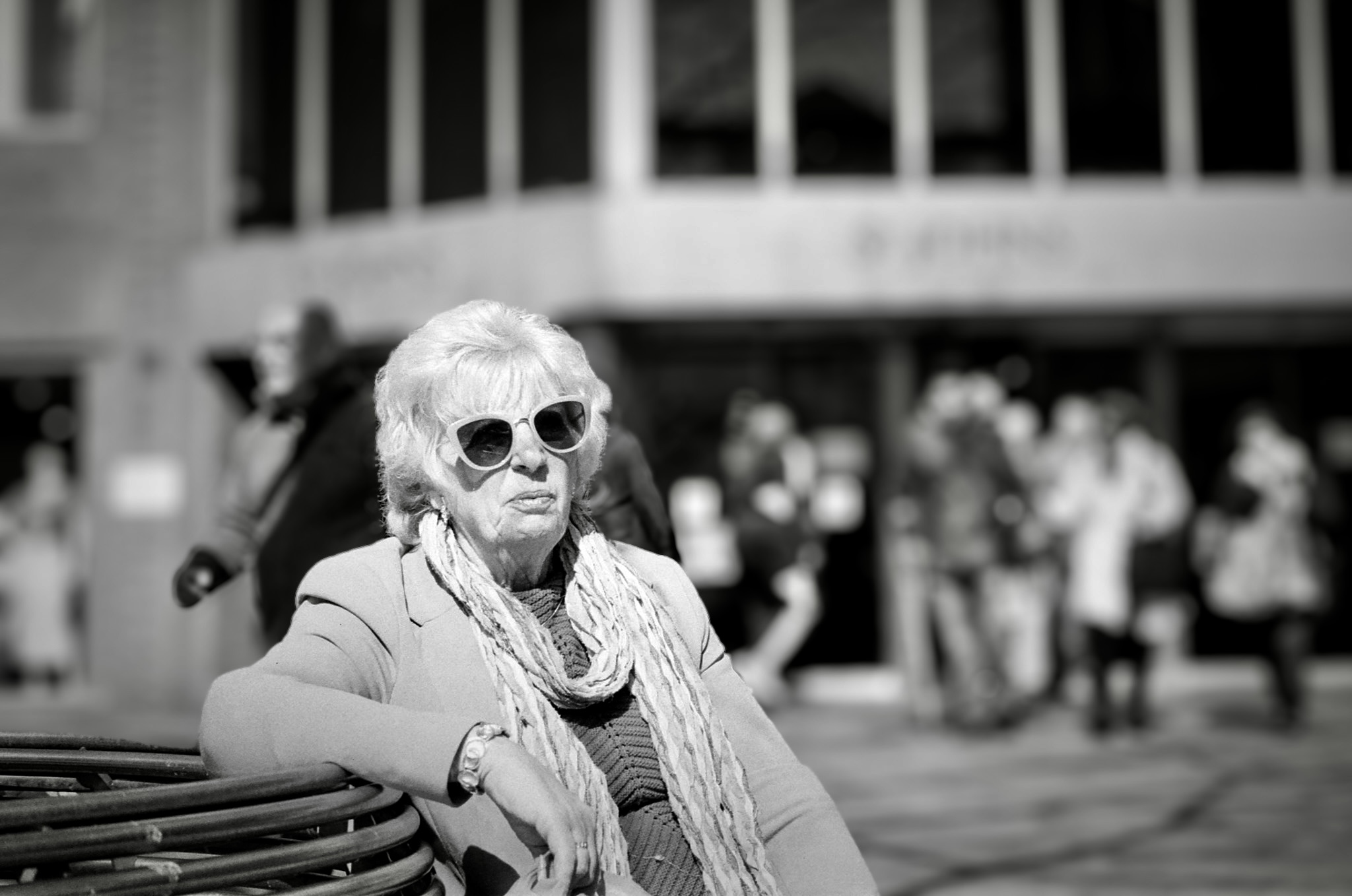
There was a time when I would have taken that photograph without hesitation. Not because it was perfect, but because it was still worth taking. Because something had presented itself to me and deserved to be acknowledged. Without trying, I’ve become less willing to accept what I see as valuable.
It is no longer enough for something to be interesting, or even striking. It must be resolved. The elements have to align. That is difficult to articulate, but is instantly recognisable to me when it appears. The light must fall with inevitability. The spacing must hold. The relationships within the frame must feel coherent — as though they could not have arranged themselves any other way.
This is not quite perfectionism, but it borrows its mental space. And most of the time, the real world refuses it. Of course it does.
It is tempting to call this refinement. Even, to accept it as a natural consequence of developing taste. That language is reassuring. It implies that the practice is moving in the right direction. Sharpening the blade, basically, earned selectivity.
But there is another possibility: you’re lying to yourself.
That what we call taste is, at least in part, a sophisticated form of rejection. The ability to dismiss the imperfect, not in the sense that it lacks value, but because it fails to conform to an ideal that has already taken hold. Perfection is not an achievement. It is a filter. It narrows the field of what we find as admissible, until eventually, only a fraction of what we encounter is allowed through.
The rest, which is to say, most of reality — is discarded.
That actually frustrates the fuck out of me. I tried to keep my photography “real” for as long as I possibly could. I wanted to keep the edges intact. I wanted the imperfections. I started photographing the people of Leeds not because they were perfect, but because I wanted to document them.
That felt like the whole point for a long time. And somewhere along the way I’ve started to lose it.
I’ve phoned in the authenticity for some limerent idea of what a photo should look like.
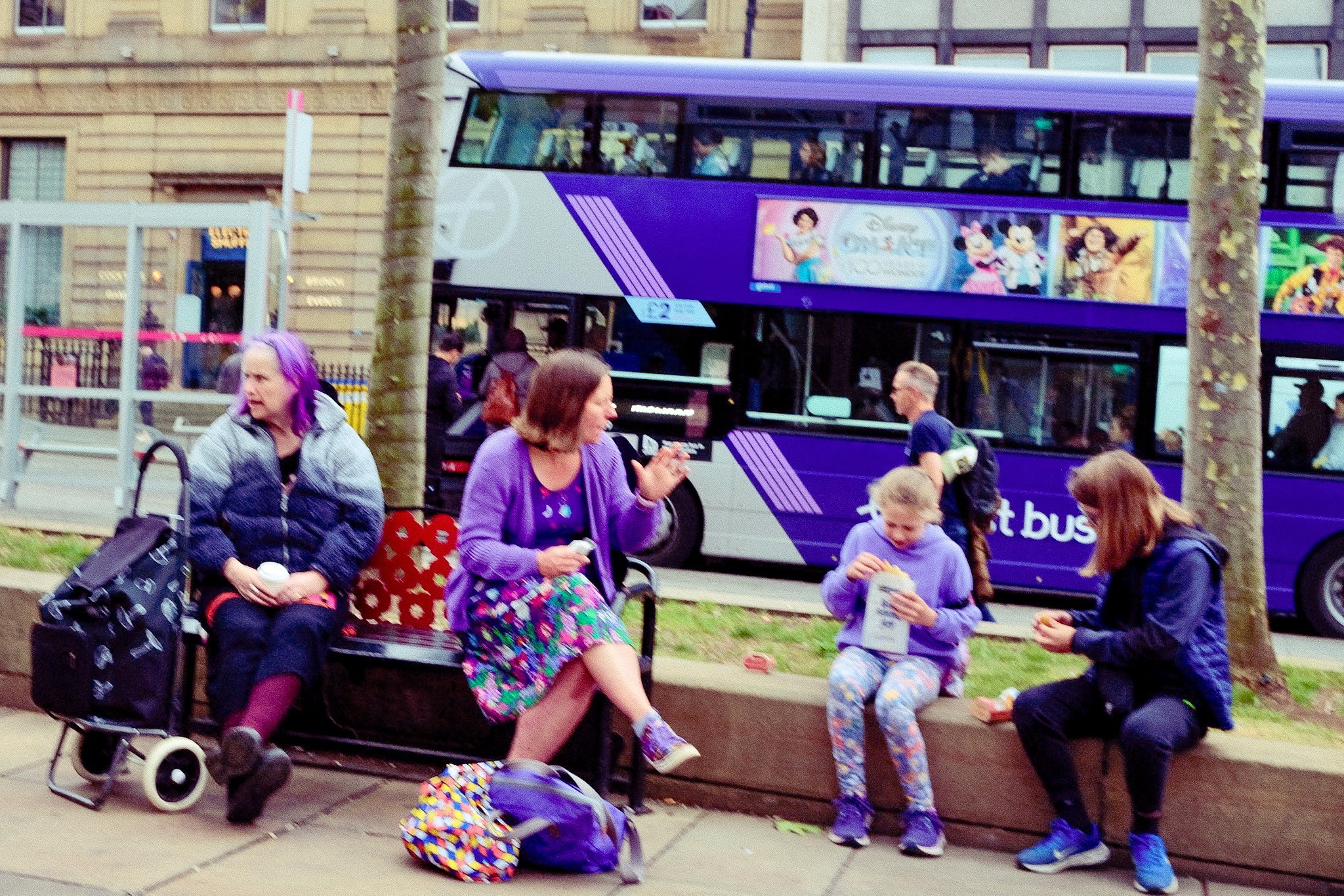
I took this photo of the purple ladies when I was starting out.
Okay, it’s not a perfect image, but it’s got something. It’s good in a way that satisfies and simultaneously frustrates the shit out of me. It’s only ruined by whatever it is I think I know now. I love that picture.
The point is, it’s usually in what we throw away that something good is hiding. Not the perfection we imagine, but the unstable, messy, and unmissable quality of things and people as they actually are.
The couple near the stack.
What I’m describing here does not resolve easily, and for that reason it deserves acknowledgement. The desire for something to become complete, and the recognition that its very incompleteness may be the thing that made it worth living.
Or, photographing, at least.
Not because it fits your standard, but because it resists it. Those things have a way of remaining. More real, in the end, than any perfect ideal.