Approachable, but not weak
Something about photographing strangers
Things people say when they see my street photos:
Are they all candid?
How did you get so close?
Weren’t they angry?
Were you nervous?
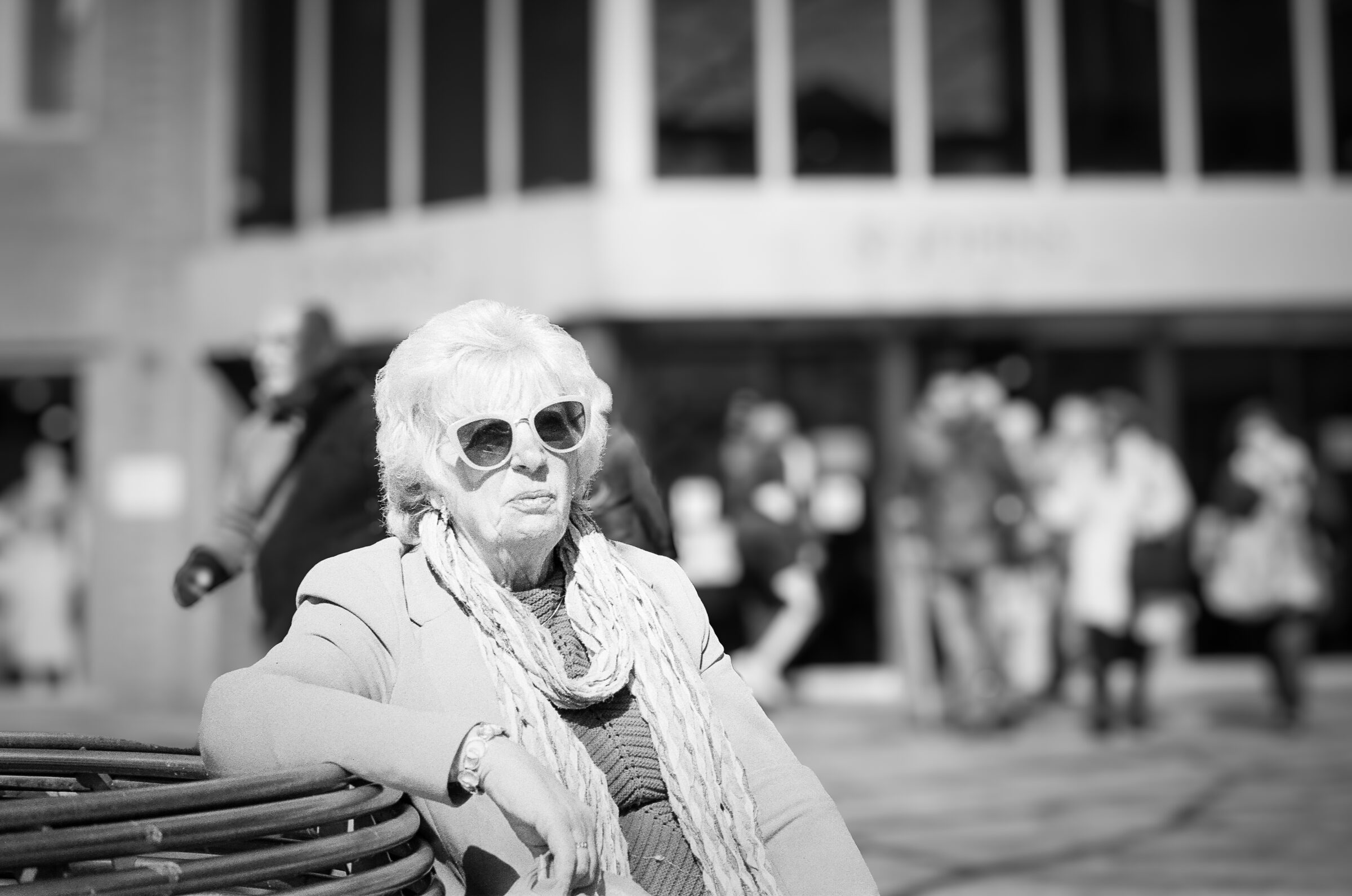
I was asked some versions of this at my local film lab social last week. A couple of people looked through my pics and asked how I photograph strangers from only a few feet away (or closer).
We live in a weird time. To point a camera at someone often feels like putting them on trial. All these viral clips, each humiliating photo shared for entertainment, every stranger transformed into a meme has certainly altered the meaning of being observed.
Mockery and genuine interest often look identical from a distance. But people possess an astonishing ability to detect intention. Before you’ve spoken a word, or you’ve explained yourself, or you’ve smiled, they’ve already begun to decide whether your attention is genuine or acquisitive.
Either way, sometimes you’re going to get shouted at.
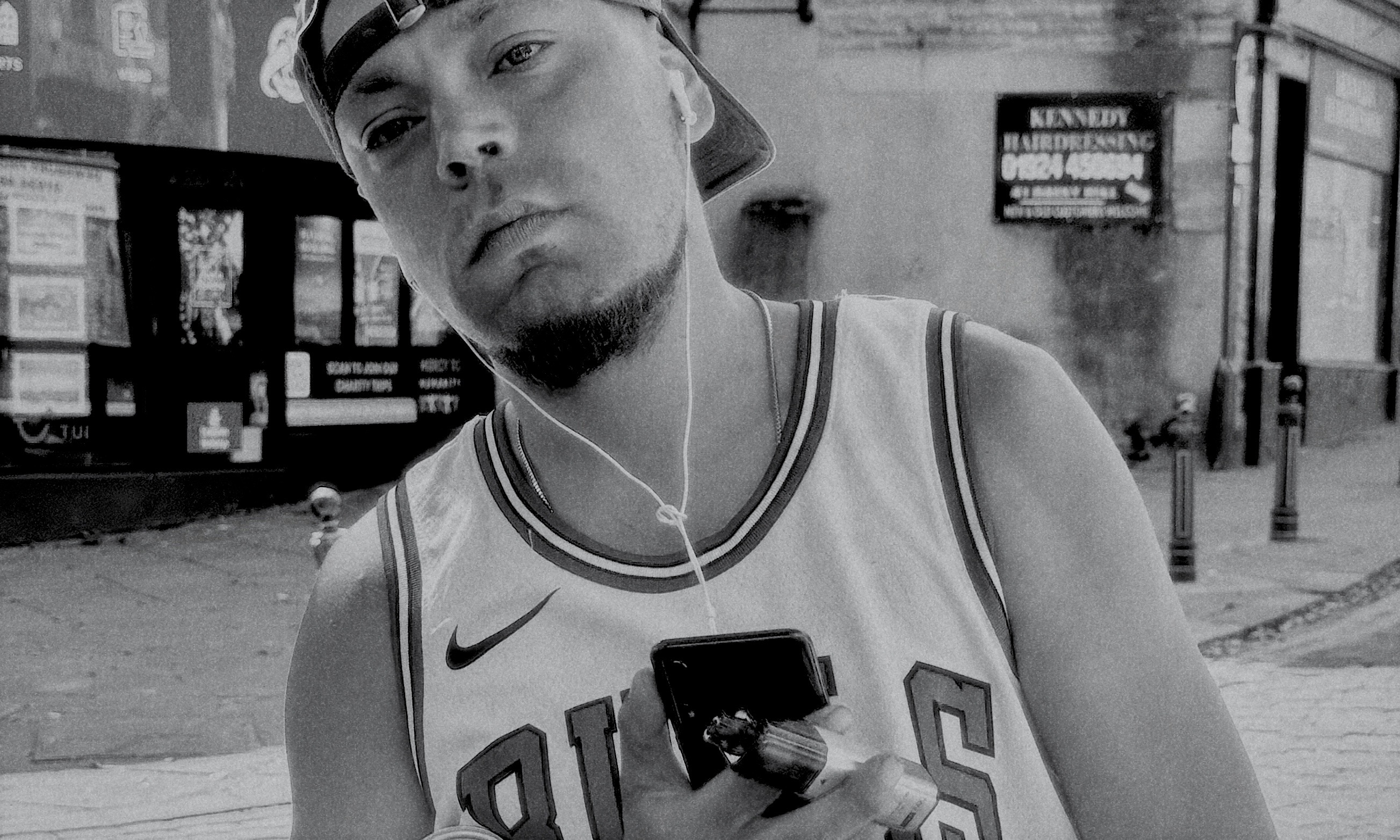
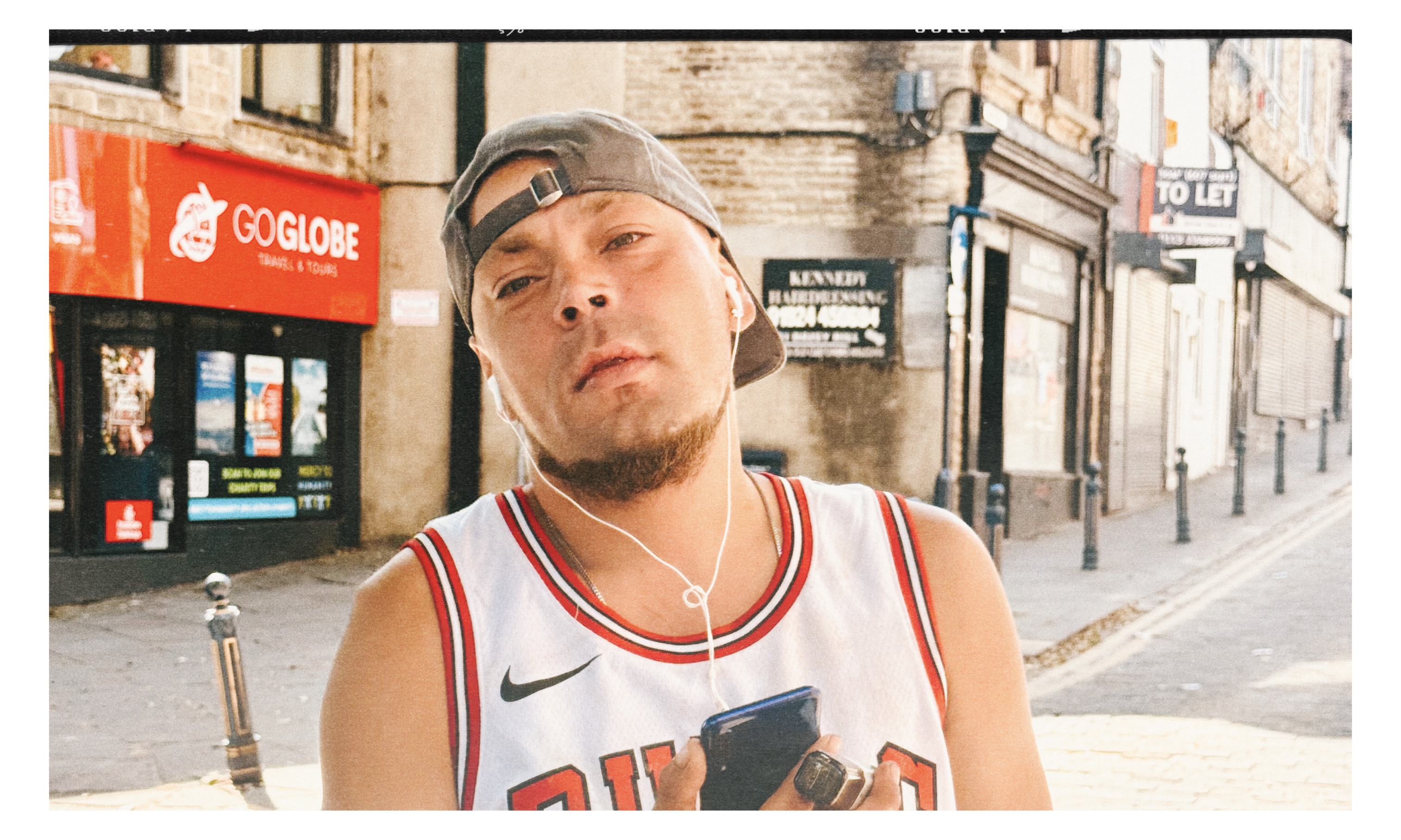
Take this photo of the guy in the Chicago Bulls jersey.
I’ve just finished taking a photo of someone else, as he comes out of the corner shop. Walking back up the hill to my car, behind me, I hear him slurring/shouting “What you doing taking pictures?”
It’s a weird instinct, but I turn on my heel and wander back down. I start with the usual spiel “I’m a street photographer, it’s my first time in Dewsbury.”
He’s squaring up to me, we’re chest to chest. His face is inches from mine. His breath smells of beer and we’re kind of having this moment. Part of me is almost excited. "Shit," I'm thinking, "this is the first time someone's going to throw hands over photographs."
Internally, I’m cursing at myself that I’m wearing Birkenstocks.
At this point, he’s got headphones in, in fact I think he’s just spitting bars. Anyway, I just keep talking, “You a bulls fan? I like your Bulls shirt.” I give it a gentle tug. “Are you a Jordan fan? I love Michael Jordan. I’ve never been to Dewsbury before.”
That type of stuff.
Finally, he takes his earphones out and he goes, “I run this part of town,” “no kidding” I said, “west side” he says proudly and pumps his chest.
Then he’s pulling a fat wad of cash out of his sock and waving it around.. (should’ve snapped him then and there.)
Unbelieveable.
Suddenly he’s laughing, and I’m a bit relieved. I realise I’ve got through to him, and all this tension dissipates.
“Well,” I say, “if you run this part of town, we’d better get a picture.”
Five seconds later, after all that, he’s fist bumping me, posing for the iPhone.
Each person is going to develop a different strategy for moments like that.
That might not be easy to teach, but the point I’m making is conversation, time and a compliment can go a long way. What’s important is that wasn’t some cheap trick, I think he just realised I wasn’t interested in humiliation. Mainly, that I wasn’t trying to expose him, or turn him into a joke.
I was surprised he went for the photo. And in the end, I probably didn’t make the most of it.
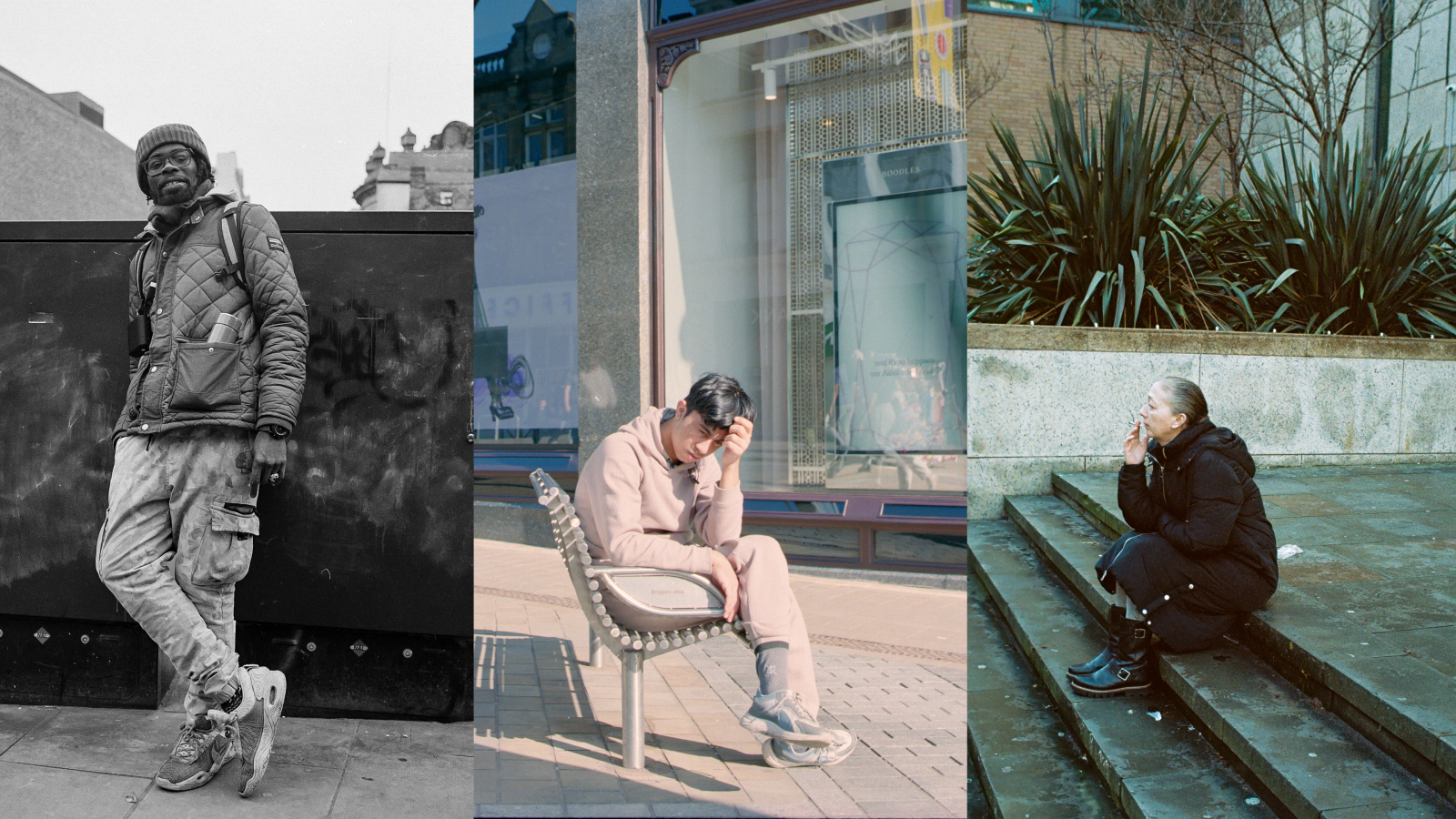
Even though a lot of photography seems to be about going unnoticed, a very underrated skill is actually in making people feel seen in the moments before or after you take the shot.
Nonetheless, street photography often makes other people feel uneasy. Most can sense whether they are being used for something. Joel Meyerowitz has this great quote in the documentary Finding Vivian Maier.
Reflecting on her life, he says:
“As she was photographing, she was seeing just how close you can come into somebody’s space, and make a picture of them. That tells me a lot about her. It tells me that she could go into a space with a total stranger and get them to accommodate her by being themselves, and generate this kind of moment.”
What’s so important about this is that it has nothing to do with photographic technique, it describes a moral and social one instead. The balance was recently described far better than I could, “approachable, but not weak.”
Vivian Maier was a master at this. Her tall frame, her french accent, her 1920s style, perhaps even the fact she was a woman helped.
But it’s the way she approached, that’s what matters.