No One Likes the Tuna Here
Fast Cars, Furious Feelings
I recently rewatched the first three Fast and the Furious films. You know, before it became the Fast & Furious franchise as Marvel heroes with cars. Back when they were smaller, a bit grittier, lower budget, and, on the surface, kind of shit.
But underneath, there’s something else going on. Something so much better.
They’re male love stories.
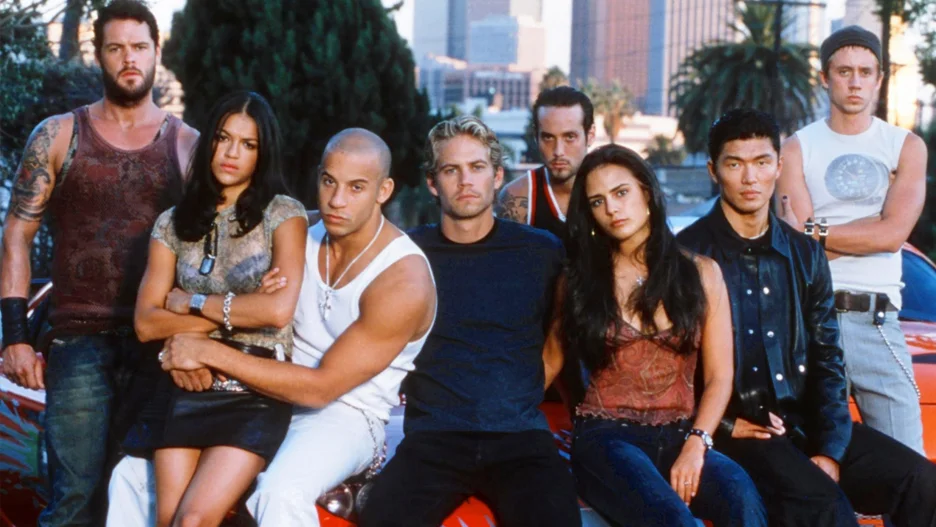
One thing I rate about these films is that everything is so simple. They’re small enough in scale that you can actually see what’s going on. And what’s going on, across the first three films — The Fast and the Furious, 2 Fast 2 Furious, The Fast and the Furious: Tokyo Drift — is that they are, quite obviously, very gay.
They’re basically homosexual power fantasies disguised as racing films. And once you see it, you can’t unsee it. And they get better for it.
They’re are built around men falling for each other, prioritising each other, and then doing everything possible to express that without ever having to say it out loud. If you look at what the characters actually do, it looks a lot more like being in love than just being mates.
They put each other first. They take huge risks for each other. They make decisions that don’t really make sense unless the relationship matters that much. They just never say it directly. Instead, it all gets routed into stereotypically hyper-”masculine” language: racing, competing, proving themselves, loyalty, risk.
So you end up with this strange contradiction:
On the surface, these films are, well, macho bravado. Underneath, they’re carrying something kind of soft and much more direct.
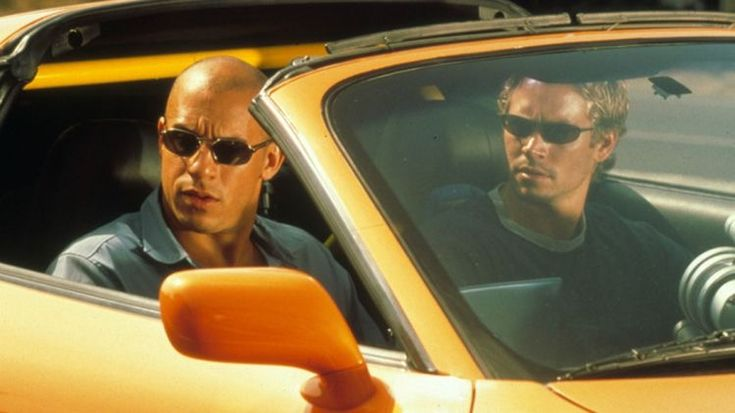
Start with the first film.
Brian meets Dominic and immediately reorganises his life around him. It’s not even subtle. He watches him constantly, studies him, adjusts himself to fit into his world. And then the questionable decisions start. I know Brian is meant to be an undercover cop, but the way he looks at Dom… that’s a different kind of surveillance, if you know what I’m saying.
Brian lies for Dom, he risks his job for him. Keeps choosing proximity to him over the life he supposedly came from. And at the end, when the entire film is set up for him to do the “right” thing, he doesn’t. Dom is a criminal, and Brian lets him go scot-free.
That’s not professional admiration. That’s not “Dom’s a cool guy.” That’s a level of emotional prioritisation that looks a lot more like falling in love than merely respecting someone. The film does give Brian a romance storyline with Mia so that all of this remains legible for 2000s Hollywood audiences. But Mia doesn’t actually explain his behaviour.
Dominic Toretto does.
And it’s cute because Dom responds in kind. He’s always testing Brian, even teasing him, singling him out, pulling him closer, placing him on the same pedestal he occupies. It’s mutual. They elevate each other. At the end of the film Brian says “I owe you a ten second car”, which, if it isn’t “I love you and I’ll see you again,” I don’t know what it is.
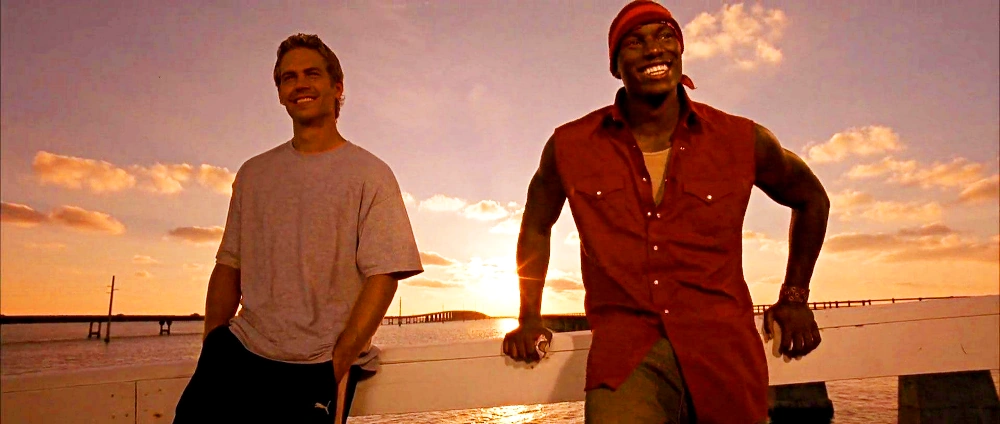
Then the second film removes the subtlety completely, not sure if that was on purpose.
2 Fast 2 Furious is just Brian and his old pal, Roman.
From the off, the chemistry is blatant. Suddenly there’s nothing left to hide behind. They don’t act like two mates catching up. They act like two people with unresolved romantic emotional histories who don’t know how to handle it. Everything is so sexually charged. The arguments are too intense. The humour is defensive, the posturing constant. But it doesn’t create distance, it just masks how close they already are.
Underneath all of it, there’s complete loyalty. They fight like lovers. They trust each other immediately and choose each other repeatedly. They risk everything for each other without needing to justify it.
The women are there in the movie, but they’re peripheral. They don’t carry the emotional weight of the film.
There’s this moment where Brian pulls this stunt, staring into Monica’s eyes whilst driving at ungodly speed down the highway. Roman quips: “He did the eyes thing, didn’t he? He got that from me.”
Which means ROMAN DID THE EYES THING TO BRIAN.
How romantic!
It’s two men completely preoccupied with each other, expressing it through competition and bravado because that’s the only acceptable format in the world of Fast and Furious.
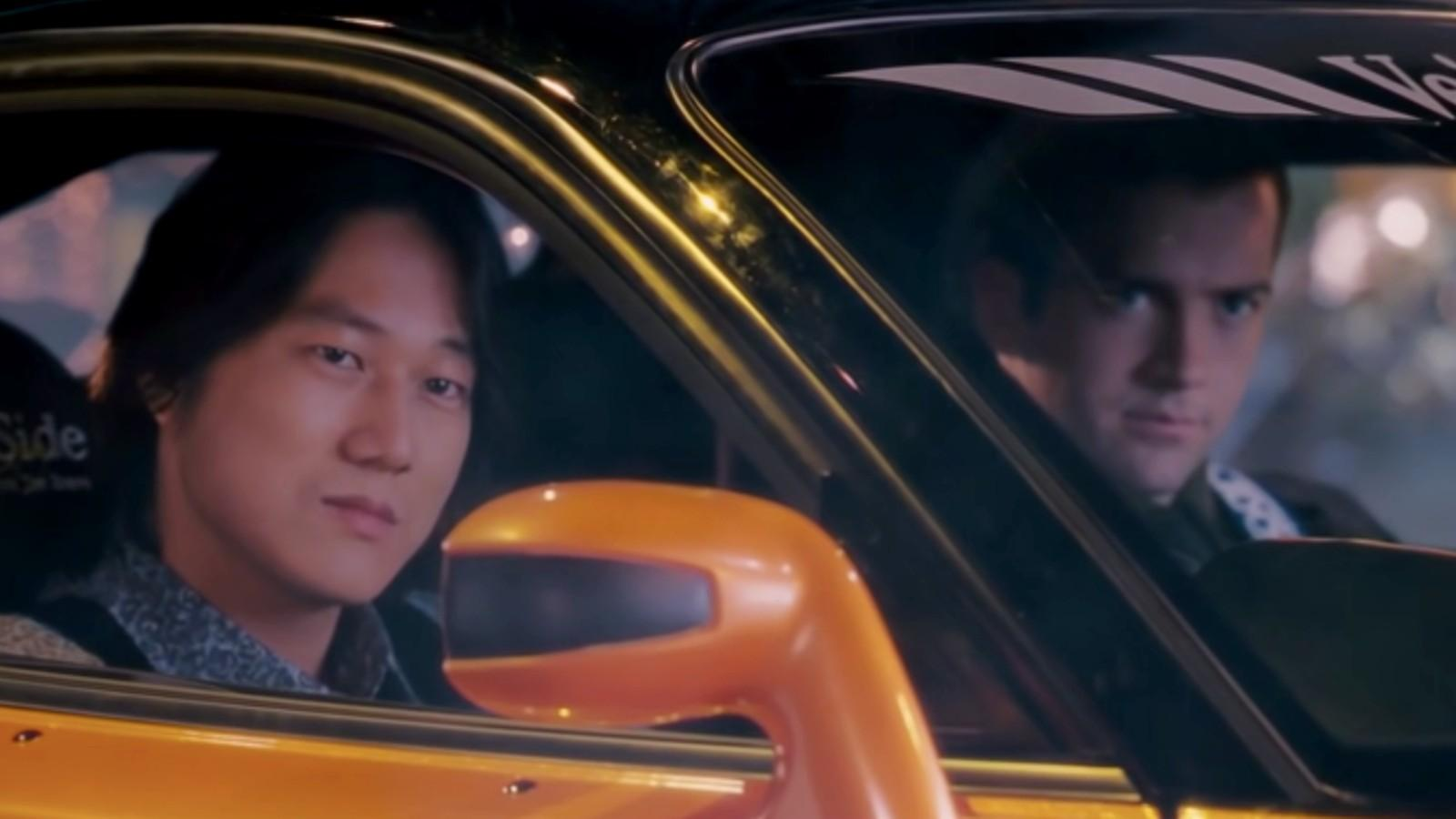
By the time you get to The Fast and the Furious: Tokyo Drift, the pattern is basically set in stone.
Sean arrives in Tokyo with no identity, no structure, nothing to anchor him. Then he meets Han, who takes over from Dominic in the role of lover-come-mentor. Same process: Sean watches him, admires him, starts modelling himself on him.
His entire trajectory in the film is defined by that relationship.
What’s interesting about Tokyo Drift (and sets him apart from Dominic in the first movie) is that Han doesn’t even try to dominate anything. That’s what makes it work. He’s calm, self-contained, and Sean orients himself around that stability almost immediately.
Again, it’s not named. But it’s doing the same thing.
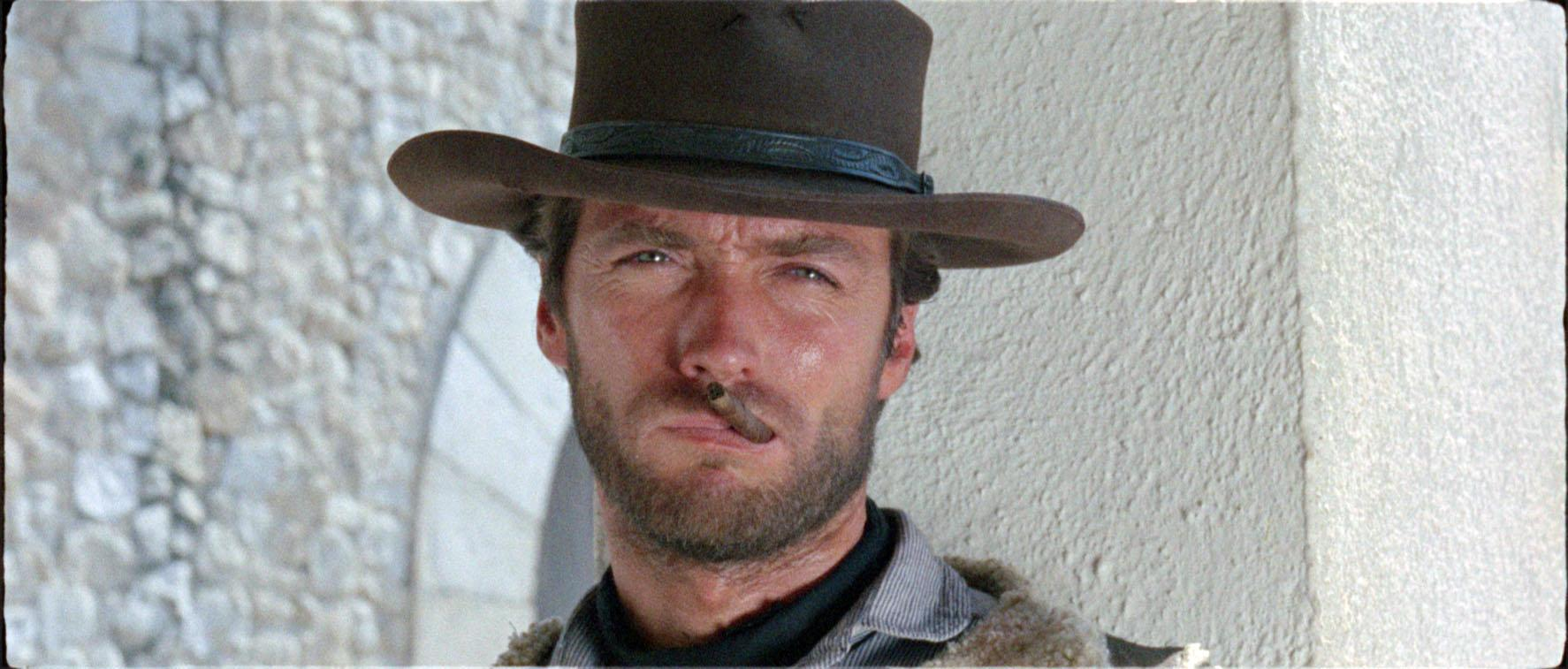
Now, fair enough, you could push back here. Intense male loyalty, men sacrificing everything for each other, choosing brotherhood over self-interest, is basically the founding model of action cinema. Especially, you know, Clint Eastwood westerns, war films, all that stuff. None of those are usually read as gay. So what makes this different?
The answer, I think, is the texture of it. In a war movie, the bonds are forged by shared trauma and survival. In the Fast and Furious movies, the bonds are forged by desire. These guys want to be near each other, to be seen by each other. They want to drive together, late at night. Brian doesn’t want to survive with Dom. He wants Dom to think well of him. He shapes himself around Dom’s approval.
That’s not just brotherhood, that’s something else entirely.
The other thing that separates these films is what the women don’t do. In a genre that genuinely wanted to tell objectively straight stories, the female characters would carry some of the emotional weight, they’d be the ones the men were ultimately oriented toward. Here, they’re decorative. I don’t mean that in a derogatory way. But the real emotional labour happens between the men. The women exist to make the subtext look like text.
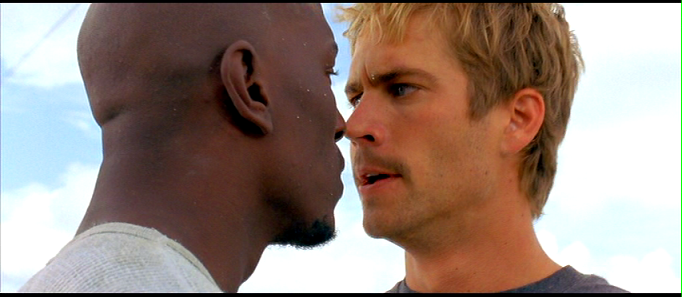
What ties all three films together is this: they are about men loving men, but only being able to express that love in ways that remain aggressively, recognisably heterosexually masculine.
So instead of “I care about you,” you get:
I’ll risk everything for you. I’ll stand beside you no matter what. I’ll choose you over my job, my safety, everything.
It’s love, just forced through the filter of early 2000s masculinity. And that’s where the real paradox is. The films are trying SO hard to be straight—cars, women, bravado—that they end up revealing something else. The sexual intensity doesn’t disappear, it just gets loud cars, more physical presence, more performative staring contests.
I doubt these movies set out to be kind of queer. But they got there anyway. And that’s way more interesting than if they’d meant to.