the uk police situation
What would’ve happened if I’d had a press pass, would that be okay?
I was standing in the street with my camera when I saw a man being arrested.
There were maybe a dozen police officers around him. I took one photo (ended up blurry). One of them came over. “Happy now?” he said. “Y’got your picture?” He didn’t actually say it as politely as that.
Then two more officers popped up and positioned themselves between me and what was happening. I said that everything they were doing was already being recorded on CCTV anyway. I pointed at the cameras all over The Headrow. I don’t think they even responded.
Nothing about that interaction was particularly tense — that’s what I’m getting at.
There was no seizure of my camera. No legal boundary crossed that I can tell. Just the slightly intimidating implication that continuing to stand there and take photos would escalate in a way that wouldn’t end in my favour.
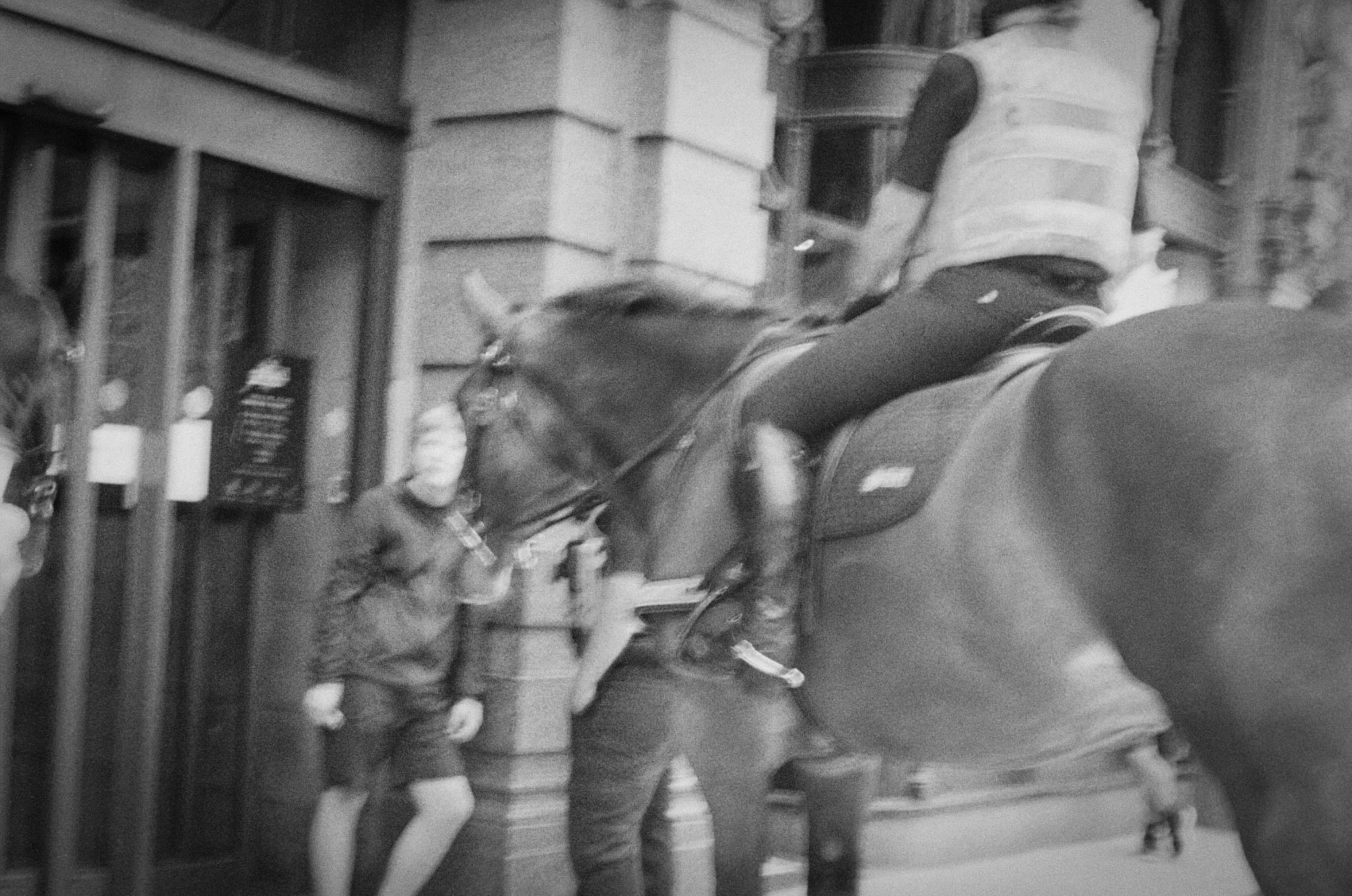
In theory, I know that I am allowed to photograph in public. In certain situations, that right clearly only exists if I’m willing to push past (these days) often armed authorities who have already decided I’m bad news.
Civil rights that depend on your appetite for confrontation are rights most people will surrender.
The asymmetry of that is incredible to me.
The police document everything. Body cameras. Vans. Private security hooked into public systems. Recording of us is constant. There’s this camera pole near my mate’s house that follows you as you walk to your car.
But seemingly the moment a record exists outside of their control, it becomes something to be managed. Not necessarily banned. Discouraged.
What would’ve happened if I’d had a press pass, would that be okay? Or used my iPhone instead of a film camera. I guess a benefit of film is that it can’t be deleted. Until that happened, it had never really occurred to me that street photography is a subtle rebellion.
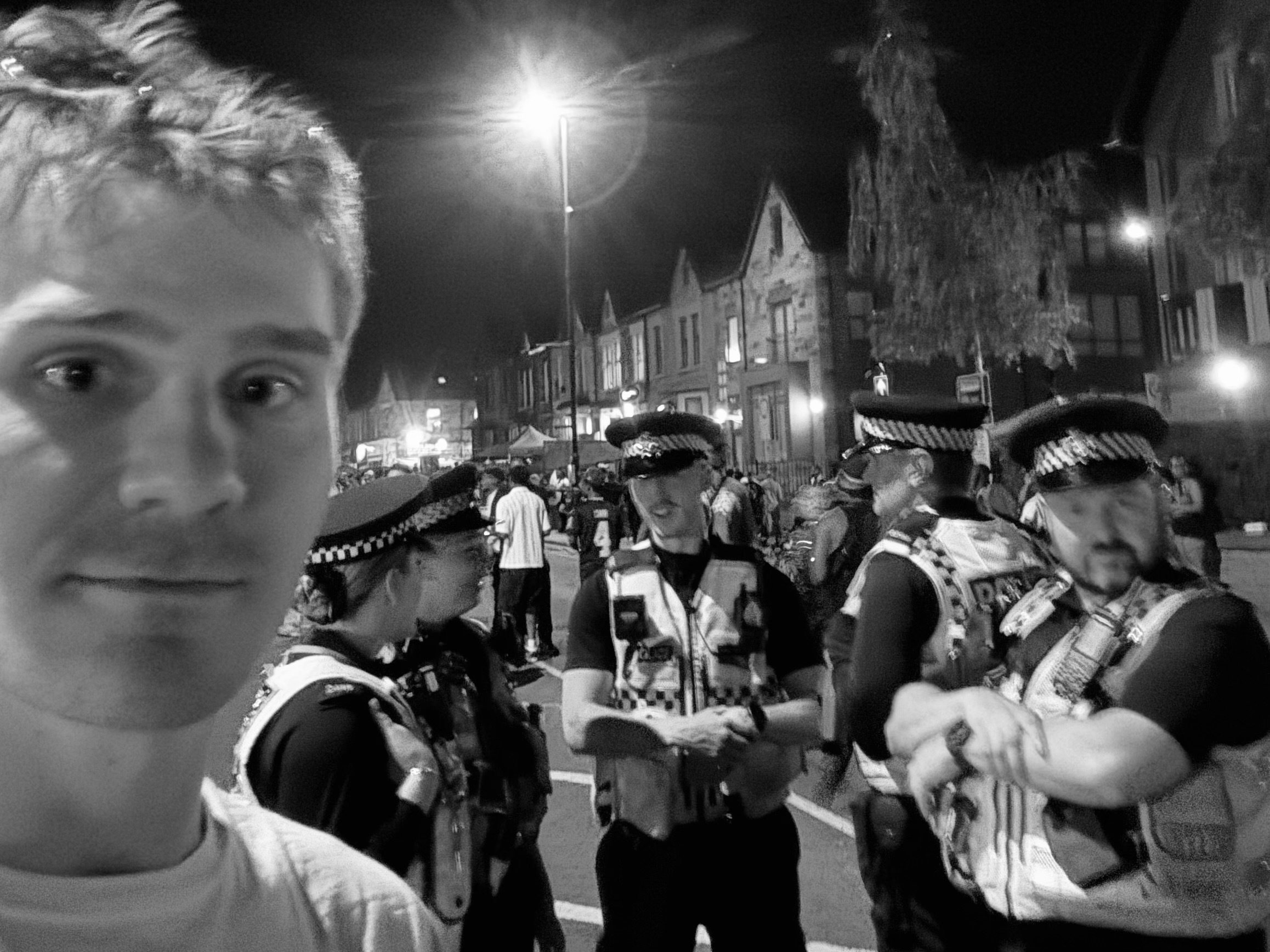
According to the Inspectorate of Constabulary and Fire & Rescue Services, so-called Level 3 patrol officers (???) receive some training in managing passive or compliant crowd control.
So there’s training to manage situations like this. But not through arrests or force, but via presence and control. The goal isn’t to forbid behaviour outright, but to steer it, contain it, and dissolve it before it could become a problem.
I’m sitting here wondering what that training actually looks like in practice. Whether it includes any real engagement with our civil liberties, or whether it’s framed purely in terms of compliance.
Not “is this allowed?” but “how do we make this stop?”
Once policing shifts from enforcing laws to managing behaviour, the boundary between public order and expression becomes dangerously thin. Nothing technically illegal needs to happen for something to be shut down.
And when that doesn’t work — our government has made it clear they’re willing to make it illegal.
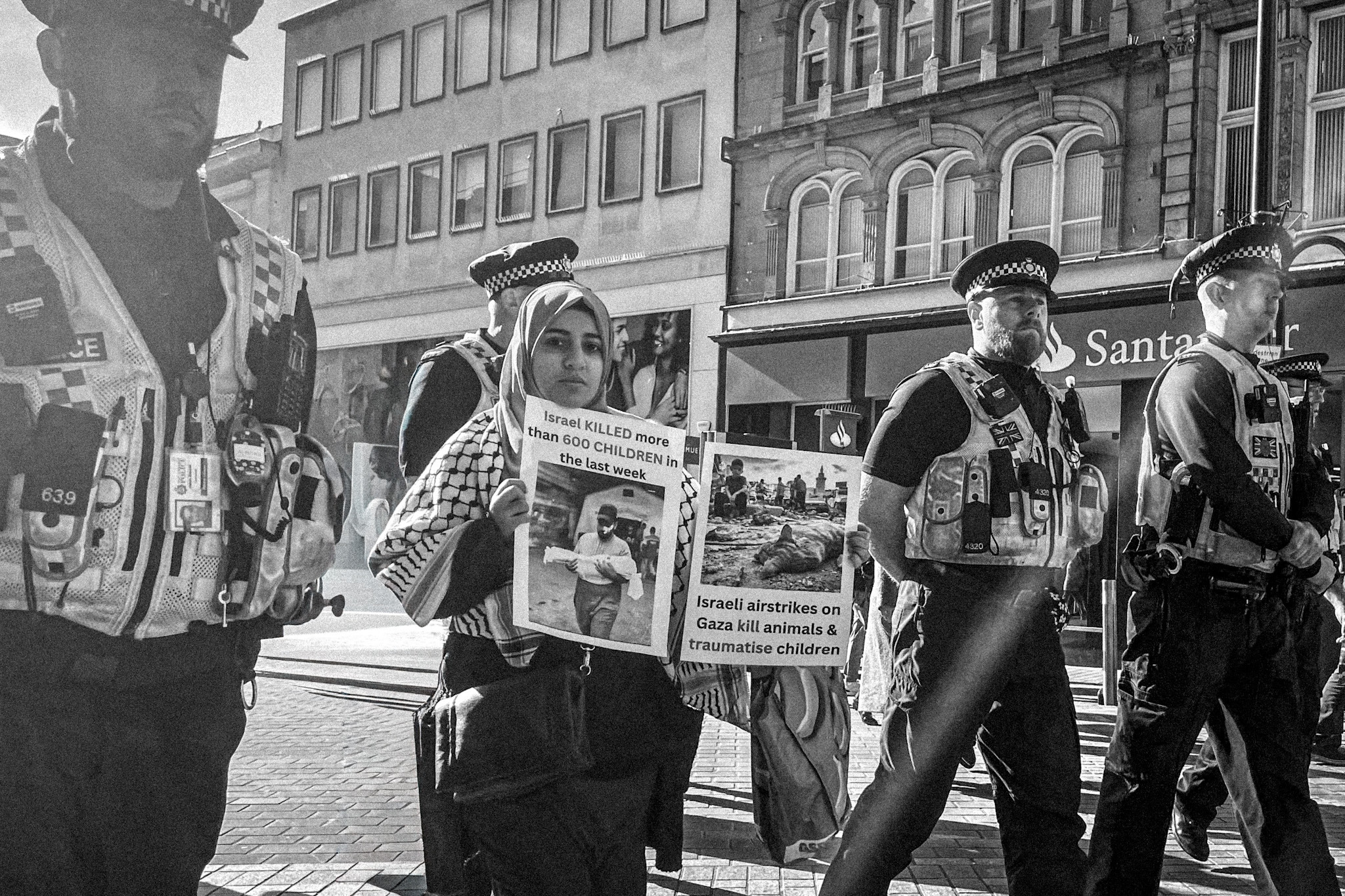
Palestine Action has been labelled in such a way that expressing any kind of support can now result in arrest. Whatever you think about the group, this is a significant step for freedom of speech. The line hasn’t been drawn around action alone, but around association, sympathy, and expression.
The intention may be public order. The effect is silence.
Historically, some of the most disturbing moments aren’t the ones where people loudly choose evil. “I was just doing my job.” “I was following instructions.” “That wasn’t my decision.”
I’m not saying the police are all bad. I’ve had good interactions with West Yorkshire Police.
What I wonder is whether moments like this are ever reflected on later by the cops. Do the people involved consider the lasting impact of these decisions? Not just how they play in the moment. I wonder if they think about what kind of precedents they set, and what sort of future they are helping to establish. Not only for the public, but for themselves, and their kids.
No one in the street told me I couldn’t take photos. They just made sure I stopped.
I don’t think the danger is that we suddenly lose our freedoms. It’s that we get used to not exercising them.