Why You Should Read The Napoleon of Notting Hill
I’ve written often on this blog about how we live in an age where detachment and irony often appear as wisdom. About sincerity being embarrassing or exposing, and how everything…
I’ve written often on this blog about how we live in an age where detachment and irony often appear as wisdom. About sincerity being embarrassing or exposing, and how everything must be accompanied by a disclaimer, a joke or a self-deprecation in order to create some distance that protects us.
I guess we often think gaining maturity means seeing through things. This book suggests it also requires knowing when to stop being so perceptive. At certain times we have to resist the urge to reduce everything to its constituent parts.
I didn’t love the book, you probably won’t either. You are probably going to want to close it just because of the style. I found myself racing to the end last night just to have it done with. Chesterton’s characters bascially never speak like ordinary people. They’re all kind of hateable. There is little to no realism, plenty of exposition, no women, and none of the satisfying rhythm you get out of a real conversation.
That said, I would still recommend it to almost anyone. Besides, it’s only 170 pages.
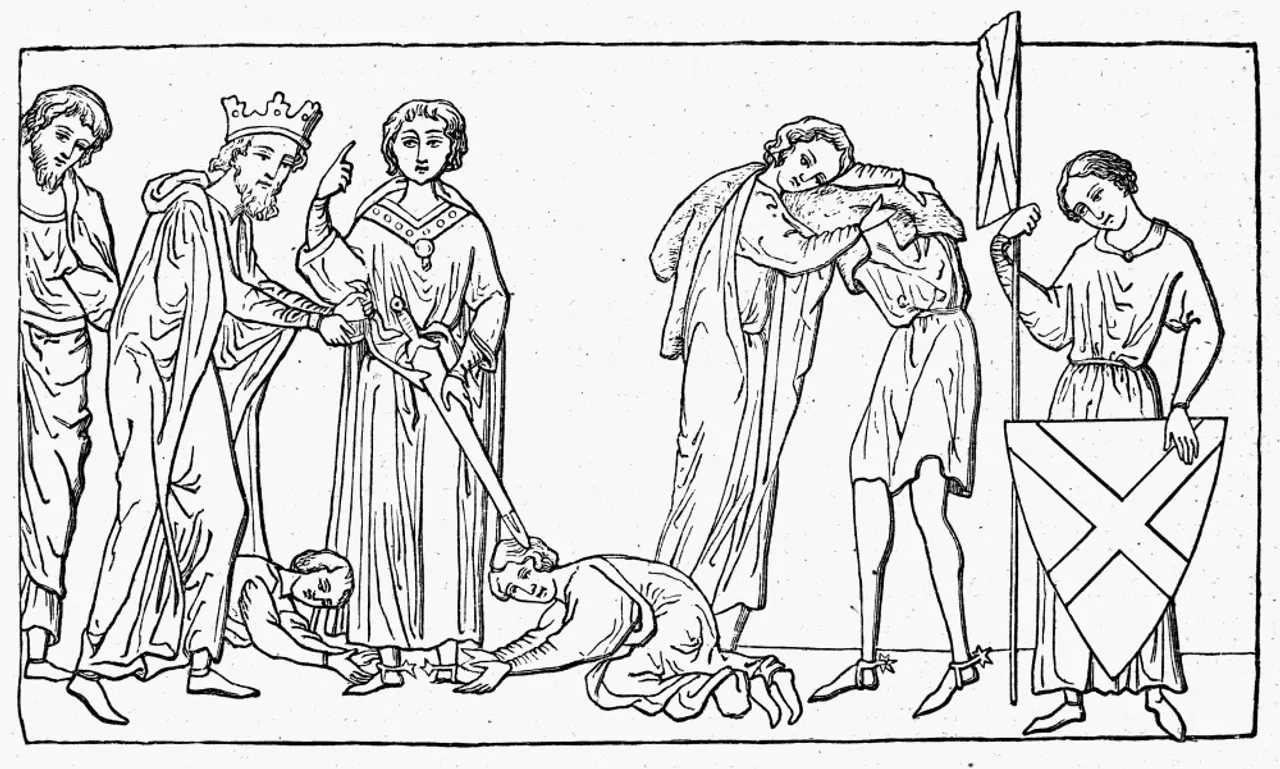
Anyway, in 1984, Auberon Quin (a satirist), and now king of England, invents elaborate traditions, heraldry and rivalries for London’s boroughs just for a laugh. Everyone seems to get it (even if it annoys them), except one man.
Adam Wayne of Notting Hill believes.
His sincerity transforms all of the siliness into something like truth, and before long the joke becomes reality. I think what saves The Napoleon of Notting Hill from its annoying style is that the central idea is poignant enough to justify the boyish grandstanding. The novel isn’t about London’s suburbs, it’s about how sincerity can transform a symbol into something sacred.
The first meeting between Quin and Wayne is probably the high point. Up until this point, Quin has assumed (or not even cared) that everyone shares his ironic distance from the world. Adam Wayne is the first person he encounters who doesn’t, and that disturbs him.
There’s a meaningful reversal that happens:
- Quin thinks he is intellectually manipulating Wayne through irony
- Wayne is actually exposing a limit in Quin’s philosophy
- Quin’s humour is exposed as a depression
I suppose ironic detachment is pretty effective against pretension, but it’s much less effective against genuine belief.
Whatever you care about; politics, religion, a football club, your hometown, friends, family, love, or your local park, each attachment begins by deciding that this thing is worth caring about more than pure logic alone can justify.
Anyway, the book does have a satisfying yin and yang-ish resolution, and you’ll probably forget most of the plot. But maybe you’ll wonder whether the things that govern your own life are, in the end, just the things you’ve chosen to believe in.
Weirdly apt listening while writing:
False Knight on the Road — Tim Hart & Maddy Prior